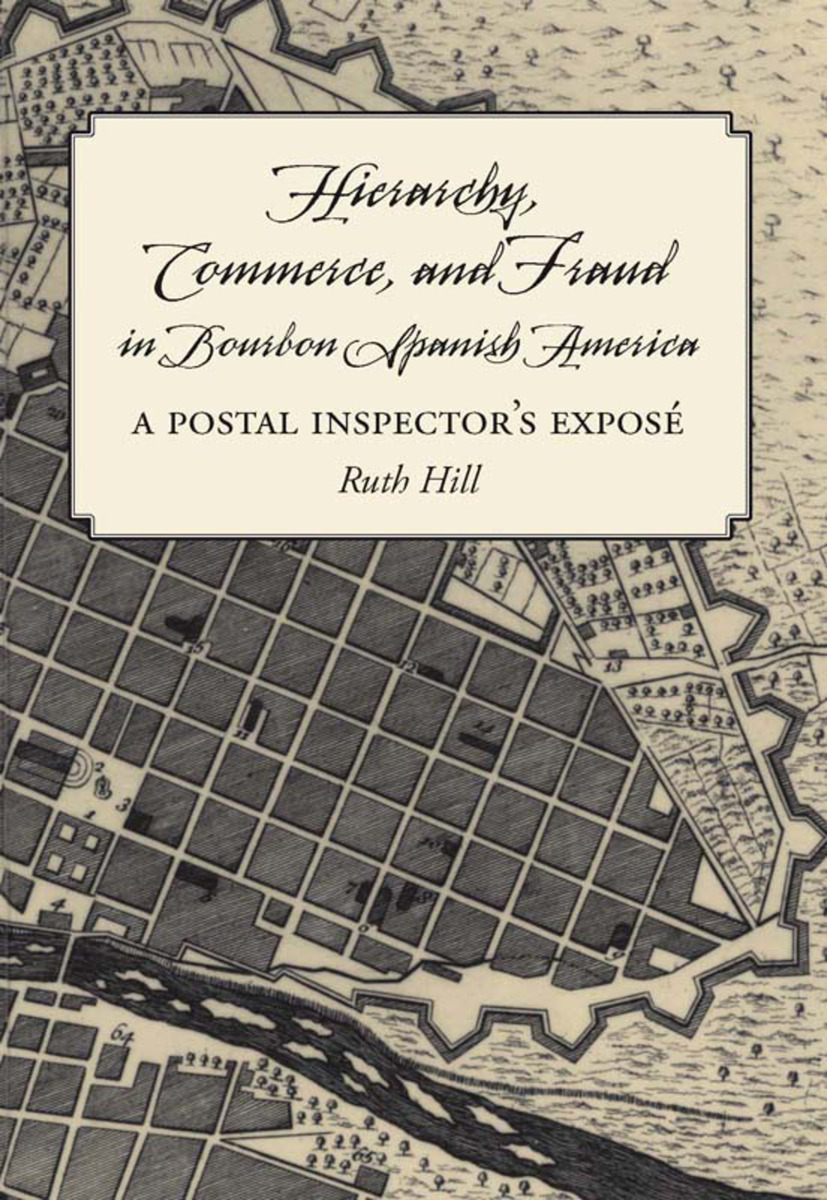
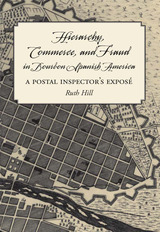
"Hill's book not only brings into focus many previously unfathomed layers of Carrio's text but also provides a fascinating glimpse into the underworld of Bourbon officialdom—a world of sexual, social, and occupational intrigues in which racial and class identities were more complex than has generally been appreciated by literary critics. . . . Hill's new book stands as a model of scholarly erudition, historicist methodology, archival research for literary scholars and . . . makes important critical interventions that will set the parameters for all future discussions of Carrio's text and stimulate critical debate beyond."
—Ralph Bauer, Dieciocho: Hispanic Enlightenment— Ralph Bauer, Dieciocho: Hispanic Enlightenment
"A study of great scope, depth and originality. It questions, challenges and surprises, and it cannot be disregarded by any contemporary scholar of Bourbon Spanish-America or of Lazarillo de ciegos caminantes."
—Peter T. Bradley, Bulletin of Spanish Studies— Peter T. Bradley, Bulletin of Spanish Studies
"A must read for scholars interested not only in El lazarillo de ciegos caminantes but also in the material reality of the Enlightenment in colonial Spanish America."
—Mariselle Meléndez, Revista de Estudios Hispanicos— Mariselle Meléndez, Revista de Estudios Hispanicos
"Professor Hill has delivered an extraordinarily rich piece of historical and literary scholarship. Hill offers original readings and throws new light on some of this canonical text's most hotly debated issues. Professor Hill takes up the challenge of reading colonial writing through material culture . . . and she delivers masterfully."
—Karen Stolley, Emory University— Karen Stolley
"Richly detailed, amply documented, and wholly original, this book looks at eighteenth-century Spanish America through the dual prism of literature and history. The real focus, though, is race and class in the Spanish colonies . . . The entire field is richer and more interesting because of [Hill's] efforts."
—David T. Gies, The Virginia Quarterly Review— David T. Gies, The Virginia Quarterly Review
"Hill's book not only brings into focus many previously unfathomed layers of Carrio's text but also provides a fascinating glimpse into the underworld of Bourbon officialdom—a world of sexual, social, and occupational intrigues in which racial and class identities were more complex than has generally been appreciated by literary critics. . . . Hill's new book stands as a model of scholarly erudition, historicist methodology, archival research for literary scholars and . . . makes important critical interventions that will set the parameters for all future discussions of Carrio's text and stimulate critical debate beyond."
—Ralph Bauer, Dieciocho: Hispanic Enlightenment— Ralph Bauer, Dieciocho: Hispanic Enlightenment
"A study of great scope, depth and originality. It questions, challenges and surprises, and it cannot be disregarded by any contemporary scholar of Bourbon Spanish-America or of Lazarillo de ciegos caminantes."
—Peter T. Bradley, Bulletin of Spanish Studies— Peter T. Bradley, Bulletin of Spanish Studies
"A must read for scholars interested not only in El lazarillo de ciegos caminantes but also in the material reality of the Enlightenment in colonial Spanish America."
—Mariselle Meléndez, Revista de Estudios Hispanicos— Mariselle Meléndez, Revista de Estudios Hispanicos
"Professor Hill has delivered an extraordinarily rich piece of historical and literary scholarship. Hill offers original readings and throws new light on some of this canonical text's most hotly debated issues. Professor Hill takes up the challenge of reading colonial writing through material culture . . . and she delivers masterfully."
—Karen Stolley, Emory University— Karen Stolley
"Richly detailed, amply documented, and wholly original, this book looks at eighteenth-century Spanish America through the dual prism of literature and history. The real focus, though, is race and class in the Spanish colonies . . . The entire field is richer and more interesting because of [Hill's] efforts."
—David T. Gies, The Virginia Quarterly Review— David T. Gies, The Virginia Quarterly Review