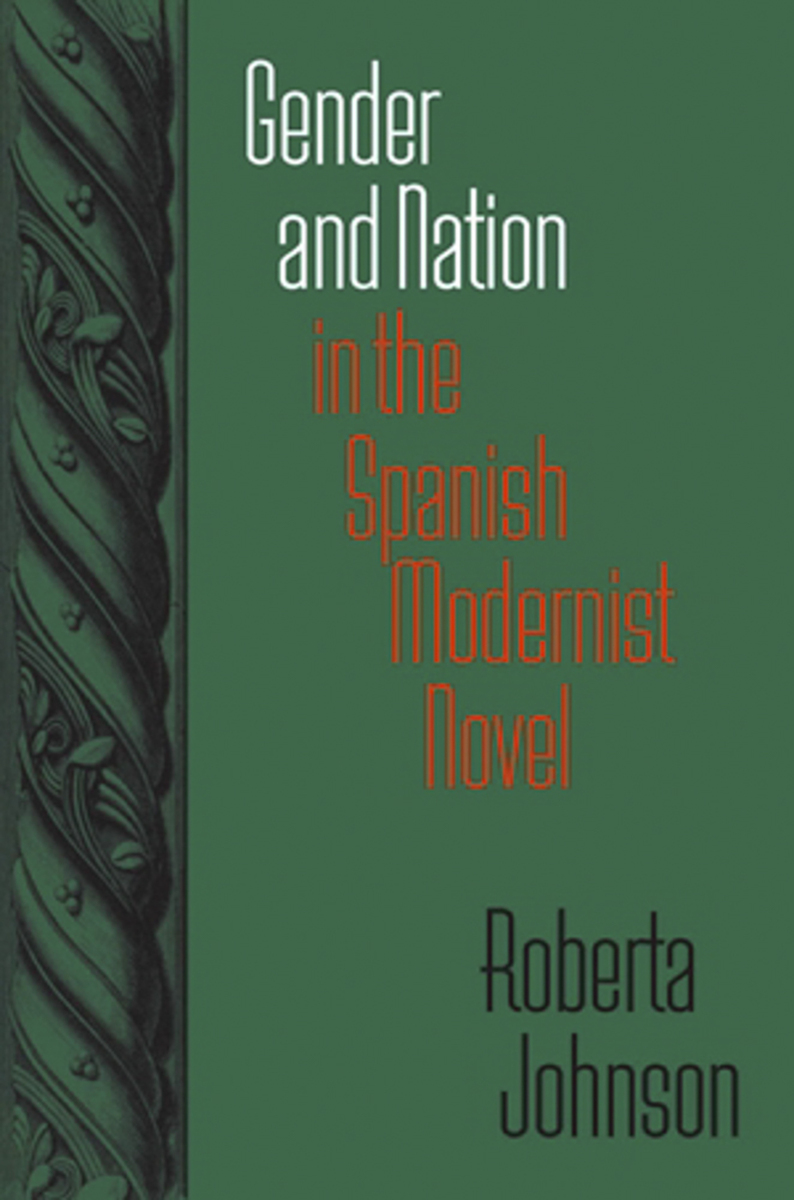
A provocative and compelling rethinking of Spanish Modernism through the lens of gender. Written with Johnson's customary insight, rigor, and elan, Gender and Nation tracks the intertextual crossfire as male and female authors debate women's place in the future of Spain. This is an illuminating study grounded in wide-ranging research. A must read for anyone interested in modern Spain.
--Maryellen Bieder— -
Roberta Johnson's new study is a major undertaking based on a mature scholar's decades-long investment in the thought and cultural flow of the days of the vanguard. An enterprise significant for its topic and impressive for its execution, it boasts expansive research, thorough historical grounding, and detailed textual analyses.
--Journal of Hispanic Cultural Studies— -
This is a major contribution to modern peninsular studies. Regardless of discipline, the two issues perhaps of greatest importance to cultural and literary studies at this moment (gender and national identity) are precisely the topics Johnson is bold enough to grapple with vis-a-vis Spain at a crucial period of its history. Slippery concepts such as modernism, feminism, nation, vanguardism are discussed in ways that question our previous understandings of them.
--Michael Ugarte— -
[A] fresh and exciting look at the Spanish novel from the Generation of 1898 to the onset of the civil war in 1936.
--Virginia Quarterly Review— -
A provocative and compelling rethinking of Spanish Modernism through the lens of gender. Written with Johnson's customary insight, rigor, and elan, Gender and Nation tracks the intertextual crossfire as male and female authors debate women's place in the future of Spain. This is an illuminating study grounded in wide-ranging research. A must read for anyone interested in modern Spain.
--Maryellen Bieder— -
Roberta Johnson's new study is a major undertaking based on a mature scholar's decades-long investment in the thought and cultural flow of the days of the vanguard. An enterprise significant for its topic and impressive for its execution, it boasts expansive research, thorough historical grounding, and detailed textual analyses.
--Journal of Hispanic Cultural Studies— -
This is a major contribution to modern peninsular studies. Regardless of discipline, the two issues perhaps of greatest importance to cultural and literary studies at this moment (gender and national identity) are precisely the topics Johnson is bold enough to grapple with vis-a-vis Spain at a crucial period of its history. Slippery concepts such as modernism, feminism, nation, vanguardism are discussed in ways that question our previous understandings of them.
--Michael Ugarte— -
[A] fresh and exciting look at the Spanish novel from the Generation of 1898 to the onset of the civil war in 1936.
--Virginia Quarterly Review— -