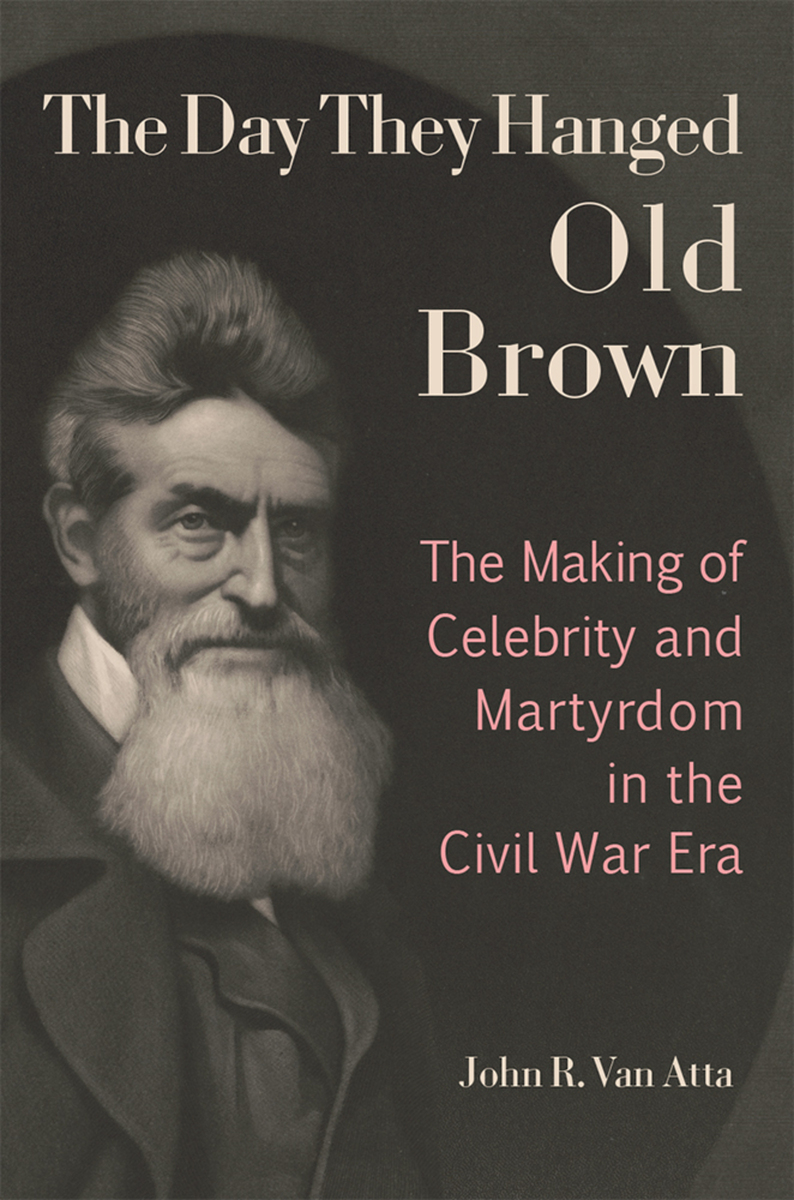
The Day They Hanged Old Brown: The Making of Celebrity and Martyrdom in the Civil War Era
University of Missouri Press, 2025
Cloth: 978-0-8262-2338-8 | eISBN: 978-0-8262-7518-9
Library of Congress Classification E451.V36 2025
See other books on: Abolitionists | Antislavery movements | Fame | Martyrdom | Press coverage
See other titles from University of Missouri Press
Cloth: 978-0-8262-2338-8 | eISBN: 978-0-8262-7518-9
Library of Congress Classification E451.V36 2025
ABOUT THIS BOOK | AUTHOR BIOGRAPHY | REVIEWS | TOC | REQUEST ACCESSIBLE FILE
ABOUT THIS BOOK
Abolitionist, fanatic, terrorist, freedom fighter, alleged murderer—all of those labels fit John Brown. Yet he also qualified as a mid-nineteenth-century celebrity. Reserved only for a few, celebrity in Brown’s time was, in historian Carolyn Eastman’s words, a quality “of being well known, an attribute, a degree of popularity and fame—the state of being celebrated by others,” as Brown certainly was.
Brown’s lifespan covered most of the period between the Revolution and the Civil War, a time of the still-early beginnings of the United States. Only then had his kind of “celebrity” started to matter. From different economic and moral perspectives, politically aware Americans clashed over different visions for the future of the country. At that time, any disruptive figure might be taken as a barometer of the progress or the decline of the republic. A function of the widely varying newspapers and magazines of that day, celebrity offered Americans an angle of vision, happily or not, as to who they were or were becoming or believed themselves to be—as if by a mirror reflection.
In The Day They Hanged Old Brown, John Van Atta examines the creation of celebrity in John Brown’s time and how it differed from modern day perceptions. Yet, as applicable as the concept of celebrity is in this case, the story of Brown’s notoriety represents far more. To his admirers, Brown was not merely a celebrity; he was a hero and, after his sacrificial death, a martyr. Not all celebrities rise to such levels. This book traces the meaning of heroism and martyrdom—as well as the opposite side of that coin, villainy—and suggests that John Brown’s story and legacy helped to redefine these concepts for many Americans during the era of the Civil War, before modern historians began to deliberate him.
Brown’s lifespan covered most of the period between the Revolution and the Civil War, a time of the still-early beginnings of the United States. Only then had his kind of “celebrity” started to matter. From different economic and moral perspectives, politically aware Americans clashed over different visions for the future of the country. At that time, any disruptive figure might be taken as a barometer of the progress or the decline of the republic. A function of the widely varying newspapers and magazines of that day, celebrity offered Americans an angle of vision, happily or not, as to who they were or were becoming or believed themselves to be—as if by a mirror reflection.
In The Day They Hanged Old Brown, John Van Atta examines the creation of celebrity in John Brown’s time and how it differed from modern day perceptions. Yet, as applicable as the concept of celebrity is in this case, the story of Brown’s notoriety represents far more. To his admirers, Brown was not merely a celebrity; he was a hero and, after his sacrificial death, a martyr. Not all celebrities rise to such levels. This book traces the meaning of heroism and martyrdom—as well as the opposite side of that coin, villainy—and suggests that John Brown’s story and legacy helped to redefine these concepts for many Americans during the era of the Civil War, before modern historians began to deliberate him.
See other books on: Abolitionists | Antislavery movements | Fame | Martyrdom | Press coverage
See other titles from University of Missouri Press