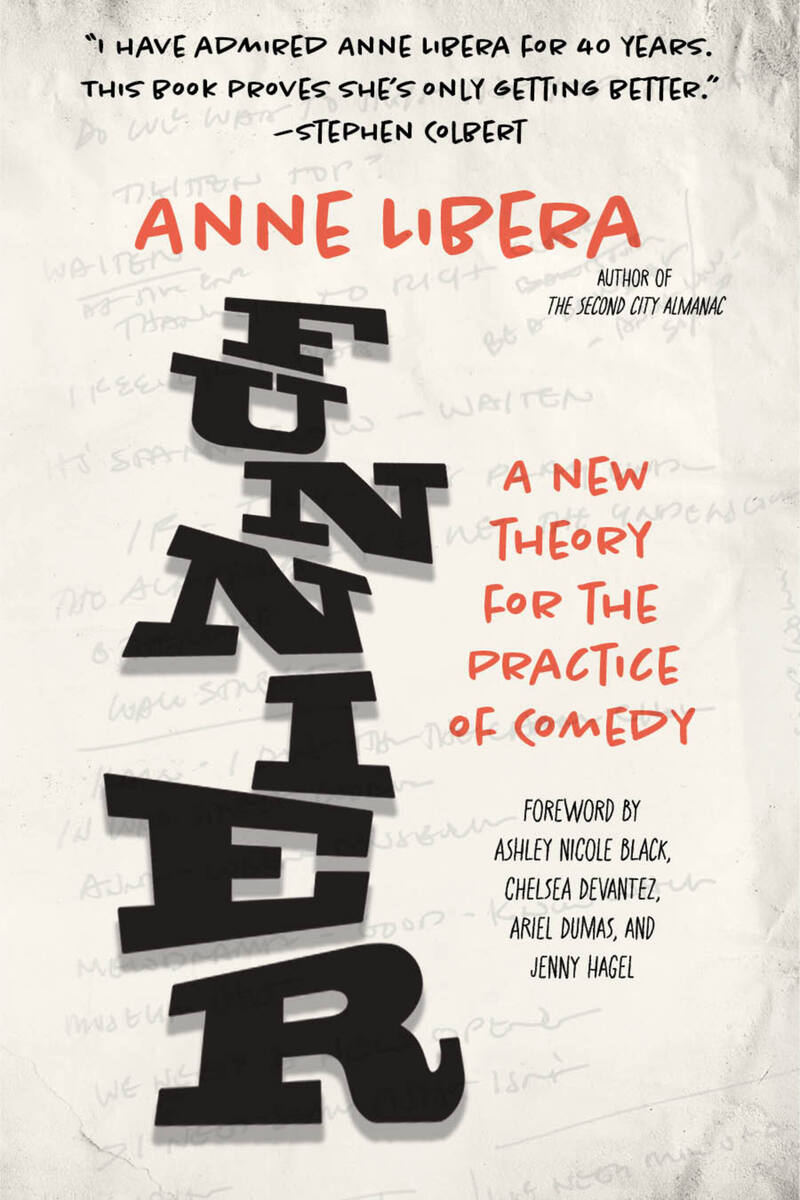
Paper: 978-0-8101-4936-6 | eISBN: 978-0-8101-4937-3
A roadmap for understanding and creating comedy from the visionary Second City comedy director
Great comedy can feel ineffable—and unlearnable. Debunking the myth that “either you are funny, or you aren’t,” Libera breaks the magic of comedy down into an innovative theory and practical toolkit. Developed over the course of thirty years as a director for The Second City and professor of comedy studies in their training center, Libera’s approach is effective across stand-up, sketch, film, and television comedy, as evidenced by her powerhouse students: Amy Poehler, Kristen Schaal, Steven Yeun, and many more of your favorites.
This book starts with a way to think about comedy and then guides you through concrete strategies for making your work smarter, richer, funnier. Libera covers everything from generating material to revising and performing to fostering social connection through comedy. In the book’s final section, Libera draws from her personal life to make a profound case for why future comedy writers should consider the ethics of their art and their responsibility to their fellow human beings in the audience. Readers won’t just be funnier because of this book—they’ll be better people.
See other books on: Comedy | Humor | Improvisation | Practice | Storytelling
See other titles from Northwestern University Press