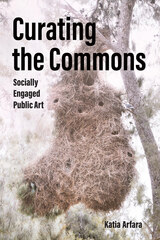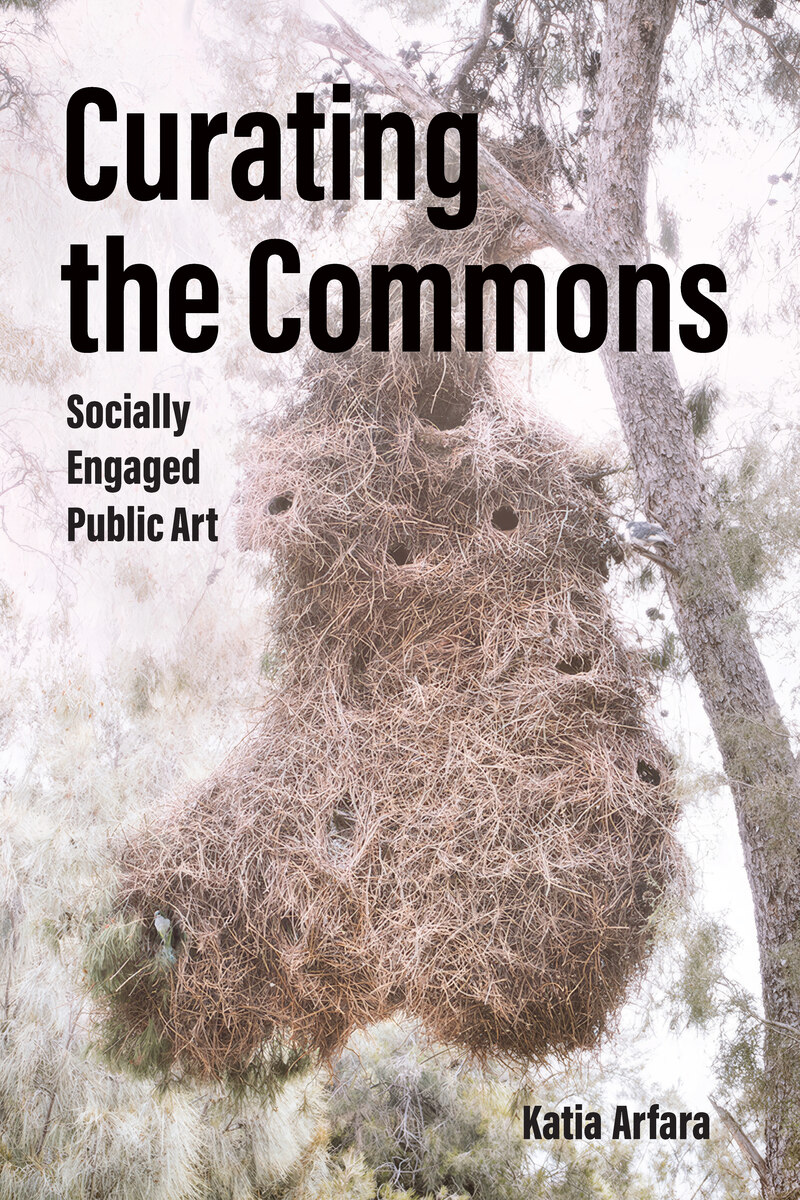
Curating the Commons: Socially Engaged Public Art
University of Michigan Press, 2025
Cloth: 978-0-472-07779-3 | Paper: 978-0-472-05779-5 | eISBN: 978-0-472-22241-4 (standard)
Library of Congress Classification N8825.A74 2025
Dewey Decimal Classification 711.57
Cloth: 978-0-472-07779-3 | Paper: 978-0-472-05779-5 | eISBN: 978-0-472-22241-4 (standard)
Library of Congress Classification N8825.A74 2025
Dewey Decimal Classification 711.57
ABOUT THIS BOOK | AUTHOR BIOGRAPHY | REVIEWS | TOC | REQUEST ACCESSIBLE FILE
ABOUT THIS BOOK
Since the 2008 financial crisis and Occupy movements around the globe, artists have increasingly turned to socially engaged public art to create new models of artistic production and community engagement. Curating the Commons examines this turn through an in-depth study of performance-centered public art presented in Athens and Piraeus, Greece, during the austerity years. Extending from Henri Lefebvre’s theory of social space, Arfara examines art and social engagement in relation to the commons and self-organized solidarity initiatives, including performance, photography, film, and sculptures that appeared in unexpected urban spaces to complicate notions of memory, mobility, and belonging. These works all ask the question: Who has the right to the city? Combining her scholarly and curatorial work, Arfara advocates for performance-centered public art that resists processes of exclusion and segregation, reclaiming public space as a commons.
By sharing critical insights, Arfara immerses the reader in the working processes of artists and collectives, showing how public art can address ecosocial concerns in aesthetic forms. Curating the Commons offers a grounded perspective on the making of cutting-edge, socially engaged public artworks and contributes to the larger effort to craft more-than-human narratives in response to global events.
By sharing critical insights, Arfara immerses the reader in the working processes of artists and collectives, showing how public art can address ecosocial concerns in aesthetic forms. Curating the Commons offers a grounded perspective on the making of cutting-edge, socially engaged public artworks and contributes to the larger effort to craft more-than-human narratives in response to global events.
See other books on: Art & Politics | Commons | Performance art | Public Art | Public spaces
See other titles from University of Michigan Press