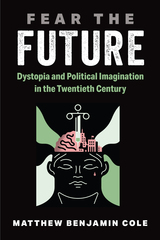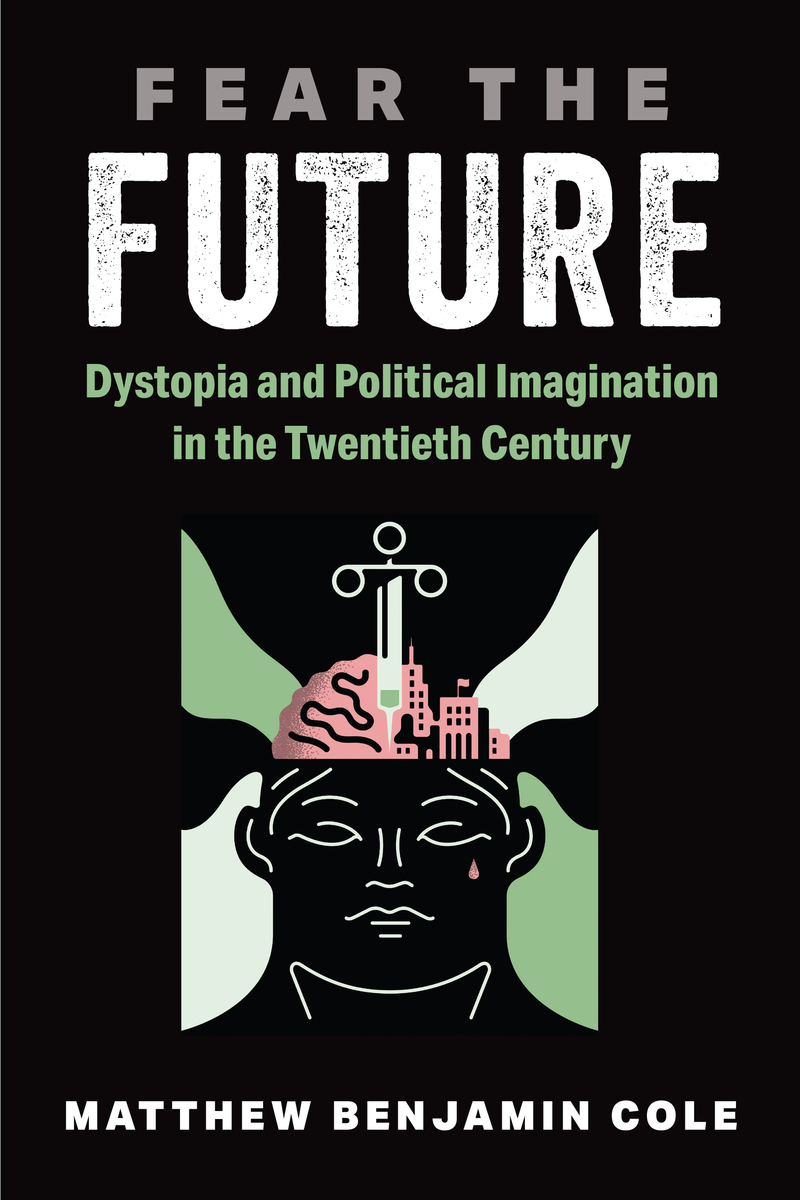
Fear the Future: Dystopia and Political Imagination in the Twentieth Century
University of Michigan Press, 2025
Cloth: 978-0-472-07774-8 | Paper: 978-0-472-05774-0 | eISBN: 978-0-472-90533-1 (OA)
Library of Congress Classification HX806
See other books on: Dystopian | Fear | Political Imagination | Political sociology | Twentieth Century
See other titles from University of Michigan Press
Cloth: 978-0-472-07774-8 | Paper: 978-0-472-05774-0 | eISBN: 978-0-472-90533-1 (OA)
Library of Congress Classification HX806
ABOUT THIS BOOK | AUTHOR BIOGRAPHY | REVIEWS | TOC | REQUEST ACCESSIBLE FILE
ABOUT THIS BOOK
After centuries of contemplating utopias, late nineteenth- and early twentieth-century writers began to warn of dystopian futures. Yet these fears extended beyond the canonical texts of dystopian fiction into postwar discourses on totalitarianism, mass society, and technology, as well as subsequent political theories of freedom and domination. Fear the Future demonstrates the centrality of dystopian thinking to twentieth century political thought, showing the pervasiveness of dystopian images, themes, and anxieties.
Offering a novel reading of major themes and thinkers, Fear the Future explores visions of the future from literary figures such as Yevgeny Zamyatin, Aldous Huxley, and George Orwell; political theorists such as Max Weber, Hannah Arendt, Herbert Marcuse, Jürgen Habermas, and Michel Foucault; and mid-century social scientists such as Erich Fromm, Max Horkheimer, Theodor Adorno, David Reisman, C. Wright Mills, and Jacques Ellul. It offers a comparative analysis of distinct intellectual and literary traditions, including modern utopianism and anti-utopianism, midcentury social science, Frankfurt School critical theory, and continental political philosophy. With detailed case studies of key thinkers from the Enlightenment to the late twentieth century, the book synthesizes secondary literature and research from a range of disciplinary areas, including in political theory, intellectual history, literary studies, and utopian studies. This wide-ranging reconstruction shows that while dystopian thinking has illustrated the dangers of domination and dehumanization, it has also illuminated new possibilities for freedom.
Offering a novel reading of major themes and thinkers, Fear the Future explores visions of the future from literary figures such as Yevgeny Zamyatin, Aldous Huxley, and George Orwell; political theorists such as Max Weber, Hannah Arendt, Herbert Marcuse, Jürgen Habermas, and Michel Foucault; and mid-century social scientists such as Erich Fromm, Max Horkheimer, Theodor Adorno, David Reisman, C. Wright Mills, and Jacques Ellul. It offers a comparative analysis of distinct intellectual and literary traditions, including modern utopianism and anti-utopianism, midcentury social science, Frankfurt School critical theory, and continental political philosophy. With detailed case studies of key thinkers from the Enlightenment to the late twentieth century, the book synthesizes secondary literature and research from a range of disciplinary areas, including in political theory, intellectual history, literary studies, and utopian studies. This wide-ranging reconstruction shows that while dystopian thinking has illustrated the dangers of domination and dehumanization, it has also illuminated new possibilities for freedom.
See other books on: Dystopian | Fear | Political Imagination | Political sociology | Twentieth Century
See other titles from University of Michigan Press