Cloth: 978-0-226-82562-5 | eISBN: 978-0-226-84366-7
Library of Congress Classification HD9502.U52C3727 2025
Dewey Decimal Classification 333.790973
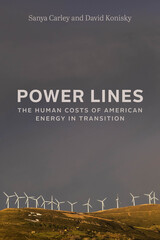
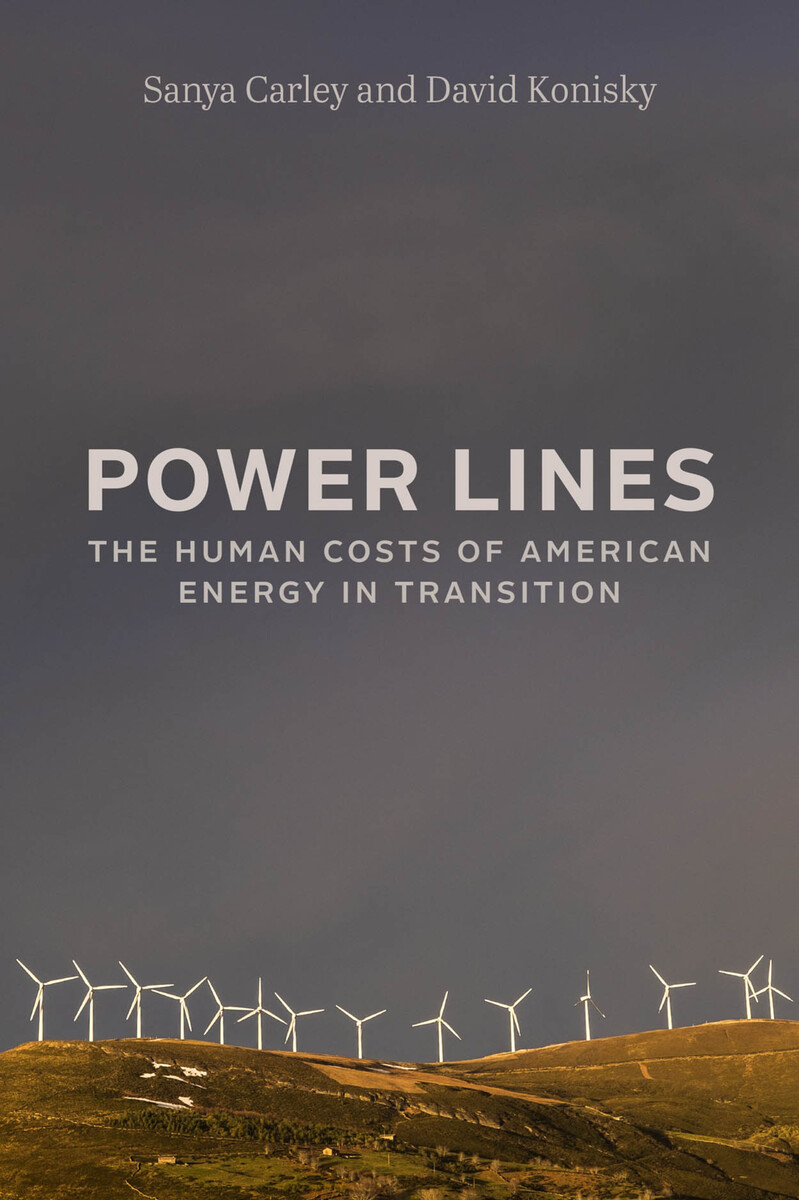
On American energy and its persisting power to destroy.
In the United States, the promise of a green-energy future is complicated by its realities. The country’s legacy energy systems are decrepit; the rollout of new technologies is unequal and piecemeal; households find themselves increasingly without reliable or affordable access; and Americans are excluded from the decisions that shape their energy futures. Having power in America has become an exercise in race, class, and wealth—in more ways than one.
Power Lines is a sweeping portrait of American energy in the twenty-first century, rendered in terms of its increasing—and inevitable—human costs. Coal miners in West Virginia lose their livelihoods as energy markets change; historically marginalized households cannot easily access new technologies; children in “sacrifice zones” adjacent to mineral-mining sites suffer health problems and limited resources; and cities and towns are burdened from the production of alternative energies.
Sanya Carley and David Konisky show current challenges and an uncertain future of America’s greatest policy imperative. The result is not only sobering but also essential for planning and pursuing a clean-energy transition that improves on the errors of the past.
See other books on: Electrical | Energy development | Environmental Economics | Power resources | Transition
See other titles from University of Chicago Press